When Doing Less Means More
Imagine a group of adults, knowledgeable about theatre production, putting on a show for a local high school. In this scenario, very well done shows are produced for the students. Now imagine that this is the sum total of a theatre program that the school offers to students: nothing more than theatre adults putting on wonderful shows for the kids. It would be safe to assume these adults would have the best intentions to be of service to the kids, but you are not crazy for thinking their good intentions would be more harm than good. Theatre productions at schools are for the students to put on, for them to learn about showmanship, and for them to grow as people.
How much of education in schools follows the adult “putting on the theatre show” model for students though? This year at Tyburn Academy, we have made some organizational shifts to build up our student’s leadership skills inside and outside of the classroom.
For the past couple of years we have had the tradition of beginning Monday mornings with the student body in our chapel. For two years, myself and the teachers had been kicking the week off with meditations and little talks to kick the week off on the right foot. The addition of this practice was warmly received by the students. This year we made an adjustment to this practice and gave this weekly responsibility to Junior and Senior classes. There are few reasons that can make adults hesitant to give kids this kind of responsibility. Some of them being: do the kids have sufficient expertise in life to share at an assembly? What if a student used the time inappropriately and turned the whole custom into a matter to be mocked? Hesitancies be darned though, and we handed the responsibility over to the students in the month of October this year. What happened at the first talk was amazing. A junior gave an impassioned speech on faith, and the audience of classmates erupted into applause when he was finished. The students took ownership of the opportunity and their classmates were responding.
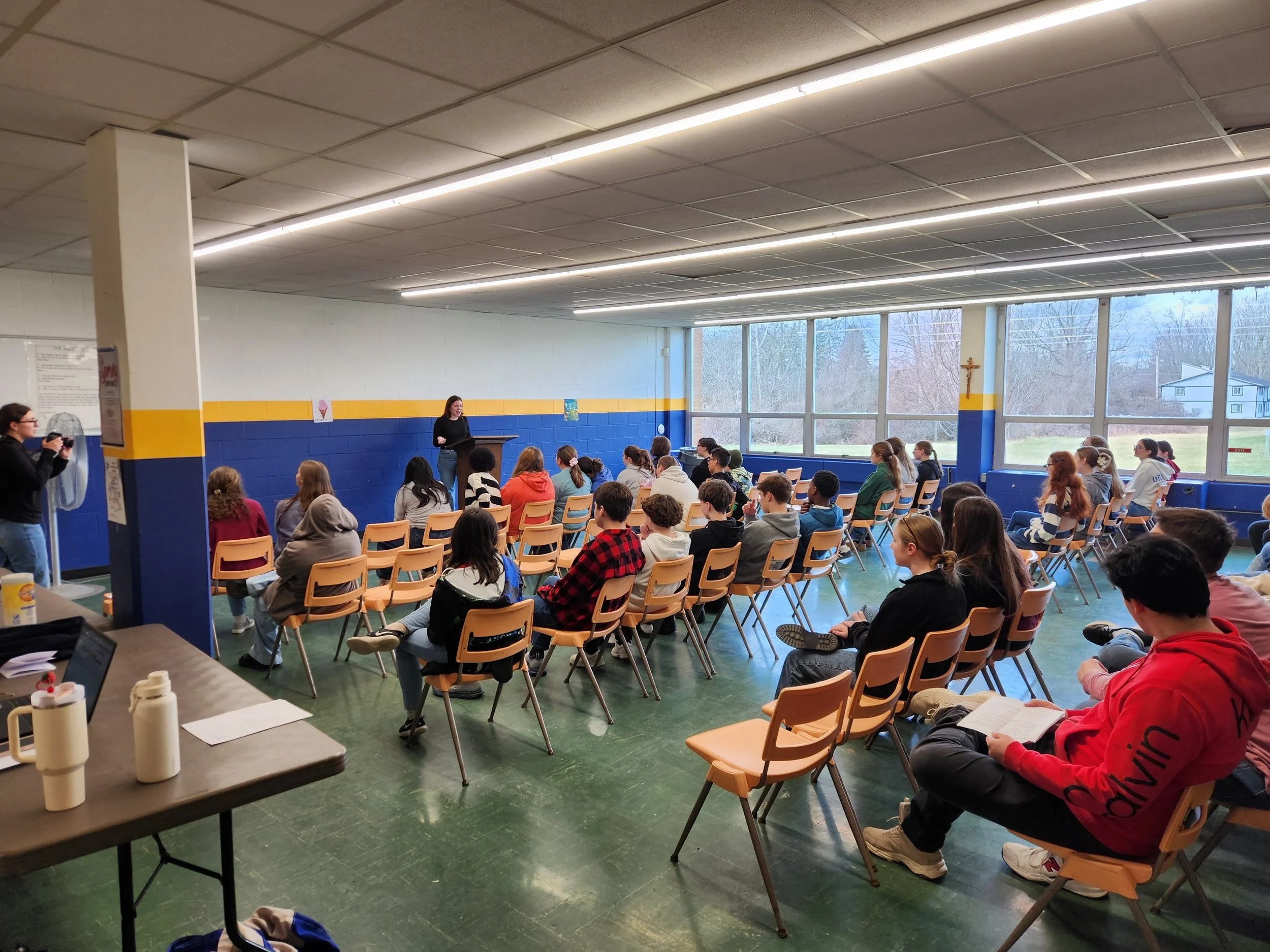
Senior Mary Shaw gives a talk to classmates at the Lent Retreat
Recognizing the benefits of developing our student leadership in this way, we let the Senior class take over another custom: retreat days. On a normal retreat day, the faculty would arrange to have a speaker come in or lead the day themselves. The day is set apart from a regular academic day so students have an opportunity for prayer, reflection and a connection with God. We turned our Lent Retreat over to the seniors. They planned the schedule, wrote the talks, coordinated lunch for the student body, etc. The underclassmen had the benefit of hearing advice from their peers, and the seniors were able to develop important leadership skills of communication, planning details, and executing. I’m happy to have led retreats for students during my years as a teacher, but I am over the moon excited for the growth I saw in our seniors taking on this initiative.
The goal going forward is to translate this principle of student-ownership into the everyday activities of a classroom. In history class, when students read historical documents instead of a textbook, they are acting as Historians discovering the past. When English class takes time for a seminar, to discuss the motives of characters in a novel, they are participating in the author’s grappling with human nature. Instruction in schools need to have this focus of the student engaging and growing. The Greek philosopher Plato rightly asserted that education is not the filling of an empty vessel with knowledge, but rather a turning of the eye towards light, so the person can see and perceive clearly. This “turning of the eye” was accomplished through a commitment to seeking Truth and pursuing Goodness by exercising virtue. When teachers can wet a child’s appetite to pursue Truth or take action that builds up virtuous habits, that is true instruction.
One last example of a custom that Tyburn students have recently taken ownership of is raising the U.S. flag every morning, and lowering it at the end of the school day. When it is lowered, the students fold the flag properly according to flag etiquette. The reason I love this tradition in particular is because I myself am ignorant of how to fold a U.S. flag according to etiquette. When I see our students knowing more about something than I do, I’m filled with joy, as our end goal should always be to leave the next generation in a better position than we found ourselves.